WHAT IS SILICA AND CARBON BLACK?
Carbon Black is a fine-grained carbon material long used as a major reinforcing agent for rubber. When dispersed in a polymer matrix, Carbon Black particles interact with the rubber chain and form a reinforcing structure, helping to increase modulus, tensile strength, tear strength and especially abrasion resistance. This is why Carbon Black still plays an important role in many technical rubber products, tires, conveyor belts, rubber hoses and friction parts.
Precipitated Silica is a synthetic form of silicon dioxide that has a large surface area and contains many silanol groups on the surface. Unlike Carbon Black, the silica surface is polar and interacts differently with rubber, so in many rubber formulations, Silica is often used in combination with a silane linker to create a more effective bond between silica particles and the polymer matrix. Studies on silica–rubber systems show that the interaction between filler and polymer is an important factor determining reinforcement effectiveness.
DIFFERENCES IN REINFORCING MECHANISM
Carbon Black has the ability to interact relatively well with many types of rubber and create a strong filler network. When the content and particle size are properly selected, Carbon Black can produce materials with high modulus, tensile strength and good abrasion resistance. The reinforcement mechanism is related to the surface area of the particles, the degree of interaction between Carbon Black and the polymer as well as the formation of a filler network in the rubber.
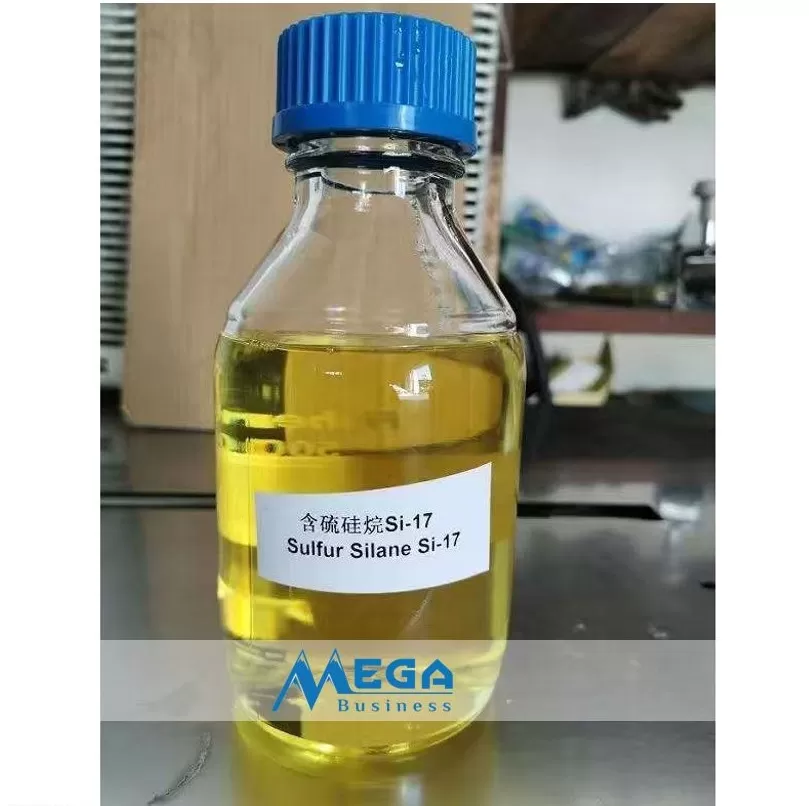
Silica also produces a reinforcing effect through its large surface area and interactions with the polymer chain, but the silica surface is more hydrophilic and polar than Carbon Black. This makes direct compatibility between silica and many rubber polymers less favorable. The silane linker can act as a chemical bridge between the silica and polymer surfaces, thereby improving dispersion, filler–rubber bonding, and reinforcing effect.
COMPARISON OF MECHANICAL DURABILITY
Both Silica and carbon black have the ability to improve the mechanical strength of rubber, but the results depend greatly on the polymer type, particle size, surface area, filler content, vulcanization system and mixing conditions. In many rubber systems, Carbon Black can produce higher modulus at the same filler content level. Carbon Black also has a clear advantage in abrasion resistance over many traditional formulations.
Silica has the potential to provide a different balance between mechanical strength, dynamic elasticity and tire-related properties. When well dispersed and used with a suitable silane system, silica can create high reinforcing efficiency while improving some dynamic properties that Carbon Black is difficult to achieve under the same conditions.
BLACK CHARCOAL HAS THE ADVANTAGE OF RESISTANCE TO Abrasion
One of the reasons Carbon Black is still so popular is its good wear resistance. Under the same filler content conditions, Carbon Black reinforced rubber systems are often more abrasion resistant than silica systems if the silica formulation has not been fully optimized.
This property is especially important for products that are constantly subjected to friction and load such as tires, conveyor belts, rollers, rubber wheels and many types of technical rubber. So, if the primary goal of the formulation is high abrasion resistance and mechanical durability, Carbon Black is still a very worthy choice.
SILICA HAS ADVANTAGES IN ROLLING RESISTANCE AND WET TRACTION
For the tire industry, Silica offers a very important advantage: the ability to improve the balance between rolling resistance and wet traction. This is one of the reasons silica–silane technology is widely used in modern tires.
Low rolling resistance reduces the energy dissipated in tire motion, while the ability to maintain grip on wet road surfaces contributes to improved braking performance and vehicle handling. Studies on silica–silane systems show that partially replacing Carbon Black with silica can simultaneously improve these two properties if the formulation and mixing process are optimized.
A study of a rubber compound for truck tire treads noted that a formulation using silica combined with organosilane was able to reduce rolling resistance by 10% and increase wet grip by 18.5% compared to a control formulation of Carbon Black under study conditions. This is the result of a specific formulation system and should not be interpreted as implying that all silica formulations achieve the same level of improvement.
SILICA NEEDS TO PAY ATTENTION TO DISPERSABILITY
One point to pay special attention to when using Silica is its ability to disperse in rubber. Because silica particles have an active surface and tend to interact with each other, they can form particle clusters if the mixing process is not well controlled. When silica is unevenly dispersed, the reinforcing effect may decrease and the product properties may not reach the desired level.
Therefore, the formula for using silica often needs to be designed to synchronize the type of silica, the amount used, and the amount of silica used. silane coupling agent, vulcanization system and mixing conditions. This is one of the key differences compared to using Carbon Black in traditional rubber formulations.
COMPARISON OF COLORS AND AESTHETICS
Carbon Black has a characteristic black color so it is very suitable for black rubber products. This is also a great advantage in the production of tires and many traditional industrial rubber products.
On the contrary, Silica is a white material so the product is not limited to black. When used in appropriate formulations, silica can be applied to light-colored rubber, white rubber or products that require high aesthetics. With Silica ZJ-355GR, the product is described by Mega Vietnam as a uniform white granule and can be used in rubber, transparent shoe soles and products that require beautiful surfaces.
COMPARISON OF SILICA AND BLACK COAL IN TIRE PRODUCTION
In modern tire manufacturing, the question is not necessarily "Silica or Carbon Black" but often which type to use, in what proportions and in what parts of the tire. Carbon Black still plays an important role thanks to its ability to strengthen, resist abrasion and create mechanical durability. Meanwhile, Silica is especially valuable in the tire tread when the goal is to optimize rolling resistance, wet traction and operating performance.
The combination Silica and carbon black in the same rubber system is also a popular approach. When designed properly, hybrid filler systems can take advantage of the advantages of both materials instead of relying entirely on one type of filler. Studies on rubber reinforced with Silica/Carbon Black systems show that combining two types of fillers can provide a balance between mechanical properties, abrasion resistance and dynamic properties.
SILICA 355GR WHAT'S NOTABLE?
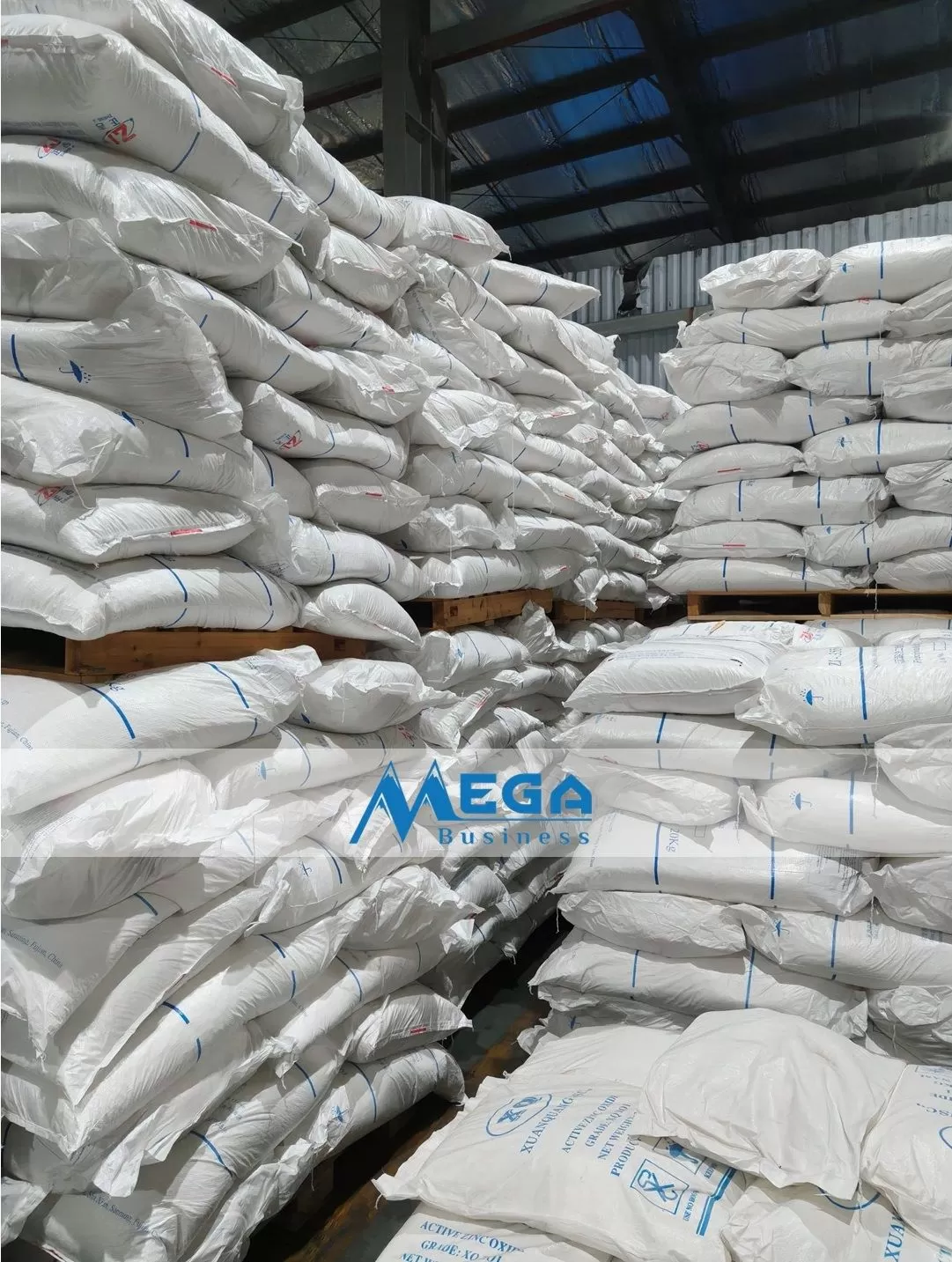
An example of precipitated silica used in the rubber industry is Silica ZJ-355GR. According to Mega Vietnam's product information, ZJ-355GR has a SiO₂ content of 97% or more, a BET surface area of 160–190 m²/g and a DBP oil absorption value of 2.00–2.60 ml/g. The product is oriented for rubber reinforcement applications, tires, abrasion resistant rubber, shoe soles and technical rubber.
High specific surface area is an important property for the interaction between silica and the rubber matrix. However, you should not rely solely on the BET index to evaluate whether a type of silica is suitable for a formula or not. Actual effectiveness also depends on silica structure, dispersion ability, polymer system, silane coupling agent, vulcanization system and processing conditions.
SHOULD I CHOOSE SILICA OR BLACK CHARCOAL?
If the product requires high abrasion resistance, good modulus and familiar mixing technology, Carbon Black is still the choice with many advantages. Conversely, if the goal is to reduce rolling resistance, improve wet traction, develop light-colored rubber, or optimize certain dynamic properties, Silica is worth considering.
For formulations that require a balance of multiple properties at the same time, combining Silica and Carbon Black can provide better results than using just one type of filler. However, the mixing ratio needs to be determined through actual testing because the effectiveness depends on the rubber type, vulcanization system, filler size and structure as well as processing conditions.
Silica and carbon black are both important reinforcing fillers in the rubber industry, but each material has its own strengths. Carbon Black stands out for its mechanical strength, modulus and wear resistance, while Silica stands out for its ability to optimize rolling resistance, wet grip and applicability to light-colored rubber products. In modern tire technology, Silica is often combined with silane binding agents and can be used with Carbon Black to create a balance between performance, durability and handling.
For businesses looking for fillers to reinforce rubber, the optimal choice is not simply to find a "stronger" material, but to determine which product properties are most important, then choose Silica, Carbon Black or a combination system of two types of fillers suitable for the formula and production process.
>> See more Black coal <<
>> See more Silica 355gr <<
>> See more Silane coupling agent <<
>> See more Epoxy resin SM828 <<
MEGA VIETNAM GENERAL TRADING COMPANY LIMITED
Address: Floor 2-A2-IA20, Nam Thang Long Urban Area, Ward. Pham Van Dong, Phu Thuong Ward, City. Hanoi.
Email: contact@megavietnam.vn; Tel: (+84) 24 375 89089;
Website: megavietnam.vn; Hotline: 1800.577.728; Zalo: 0971.023.523