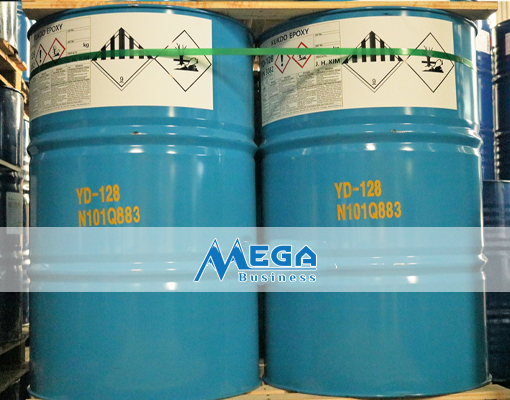
However, many newcomers often understand that epoxy resin sticks to everything, when in fact the adhesion of epoxy depends greatly on the type of surface, the level of surface treatment, the construction environment and the type of curing agent used. There are extremely strong epoxy surfaces such as steel or concrete, but there are also plastics where epoxy is very difficult to adhere to if not handled properly.
The article below will help newcomers understand in detail the adhesion ability of epoxy resin on common surfaces such as steel, concrete, wood and plastic, and explain why there are differences between each type of material.
WHY DOES EPOXY RESIN HAVE HIGH ADHESION?
Epoxy resin is a reactive polymer that, when combined with a curing agent, will form a highly durable thermosetting material. After completely curing, epoxy forms a very durable cross-linked polymer network, helping the material have: High mechanical adhesion, good chemical bonding ability, low shrinkage when curing, and relatively good resistance to water, chemicals and temperature.
The special feature of epoxy is that it not only "sticks" by sticking to the surface like regular glue, but also has the ability to penetrate into microscopic pores or create chemical bonds with the material surface. This helps epoxy often have stronger adhesion than many other types of glue or paint.
However, high or low adhesion also depends on: Surface cleanliness, surface roughness, humidity, grease or dirt content, construction temperature, type of base material and type of epoxy used.
ADHESION OF EPOXY ON STEEL SURFACE
Steel is one of the surfaces that epoxy adheres to best if treated properly. This is also the reason epoxy is used a lot in:
- Anti-corrosion paint for steel structures.
- Painting ships.
- Industrial floor paint.
- Metal structure glue.
- Paint pipes and tanks.
Why Does Epoxy Resin Adhere Well to Steel?
Steel surfaces have high surface energy, making epoxy easy to wet and spread evenly. When steel is roughened by sandblasting or mechanical grinding, epoxy can also penetrate the microscopic slots to create extremely strong mechanical locks. In addition, some epoxy systems are also capable of creating chemical bonds with the metal oxide layer on the steel surface.
Conditions for Epoxy Resin to Adhere Well to Steel
To achieve high adhesion, steel needs to be completely free of grease, no rust, have appropriate roughness and be dry before construction. In industry, steel surfaces are often treated with SA 2.5 sandblasting, sandblasting and solvent degreasing. If the steel is still oily or lightly rusted, the epoxy can still adhere initially but can easily peel off after a period of use.
Common Errors
Newcomers often encounter mistakes such as painting directly on oily steel, not treating rust, constructing when the steel is condensed with moisture, and mixing epoxy in the wrong ratio. These errors cause the epoxy layer to easily blister, peel off edges, delaminate and lose its anti-corrosion durability.
ADHESION OF EPOXY ON CONCRETE
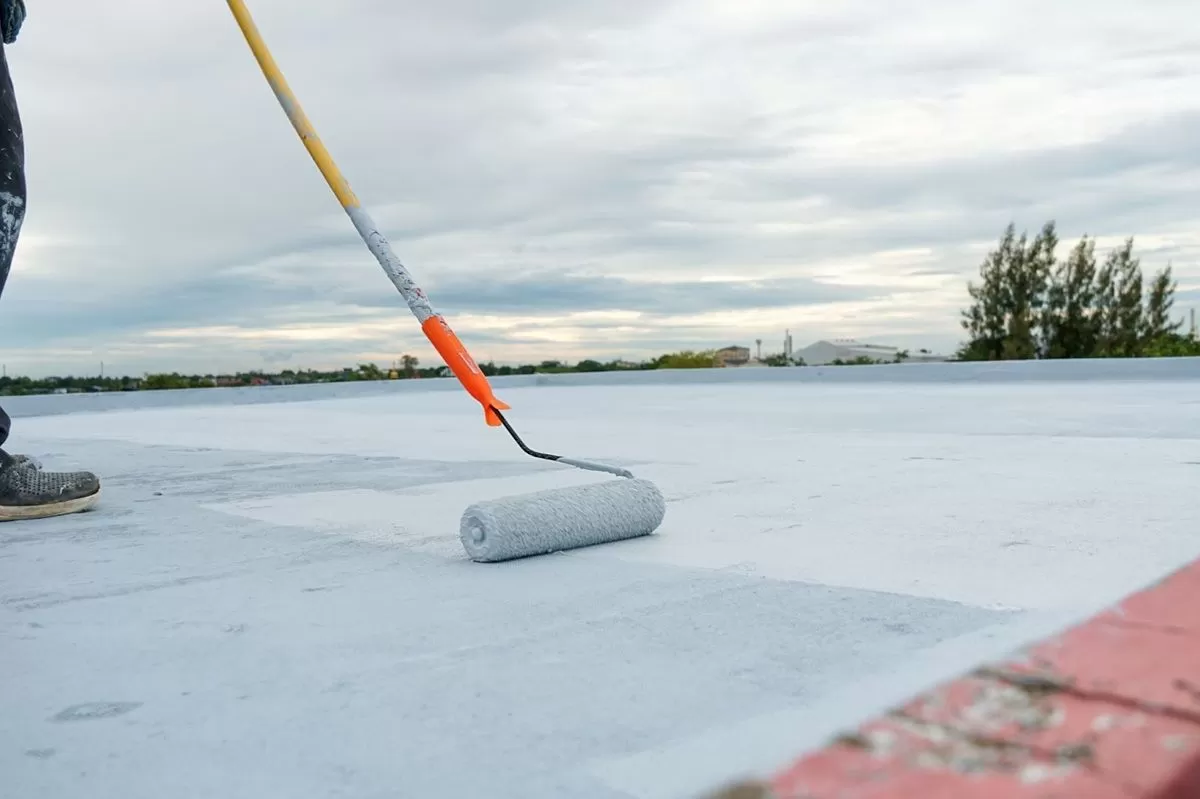
Concrete is an extremely popular material in epoxy floor construction, waterproofing and building reinforcement. If applied properly, epoxy can adhere very firmly to concrete for many years.
Why does Epoxy adhere well to concrete?
Concrete has a micro-porous structure. When applied, liquid epoxy can penetrate deeply into the small capillaries inside the concrete, thereby creating a very strong mechanical bond after curing. This helps epoxy floor paint or epoxy concrete repair glue achieve high durability.
Factors Affecting Adhesion
Although epoxy adheres well to concrete, concrete is also a material that can easily cause errors if not handled properly. Important factors include:
- Concrete moisture: This is the most common cause of peeling. If the concrete is still damp, the steam will push the epoxy layer up, causing air bubbles and blisters to appear after a while. Normally new concrete needs enough time to dry before being coated with epoxy.
- Concrete strength: If the concrete is too weak or the surface is dusty, the epoxy will stick to the dust layer instead of sticking to the actual concrete structure.
- Surface treatment: The surface needs to be ground rough, thoroughly vacuumed, and remove excess grease and cement.
The Role Of Epoxy Primer Layer
In industrial floor construction, the epoxy primer layer is very important because it helps increase permeability, block concrete dust, and increase adhesion to the top coating. Skipping the primer layer often causes the paint system to have a significantly reduced lifespan.
ADHESION OF EPOXY ON WOOD
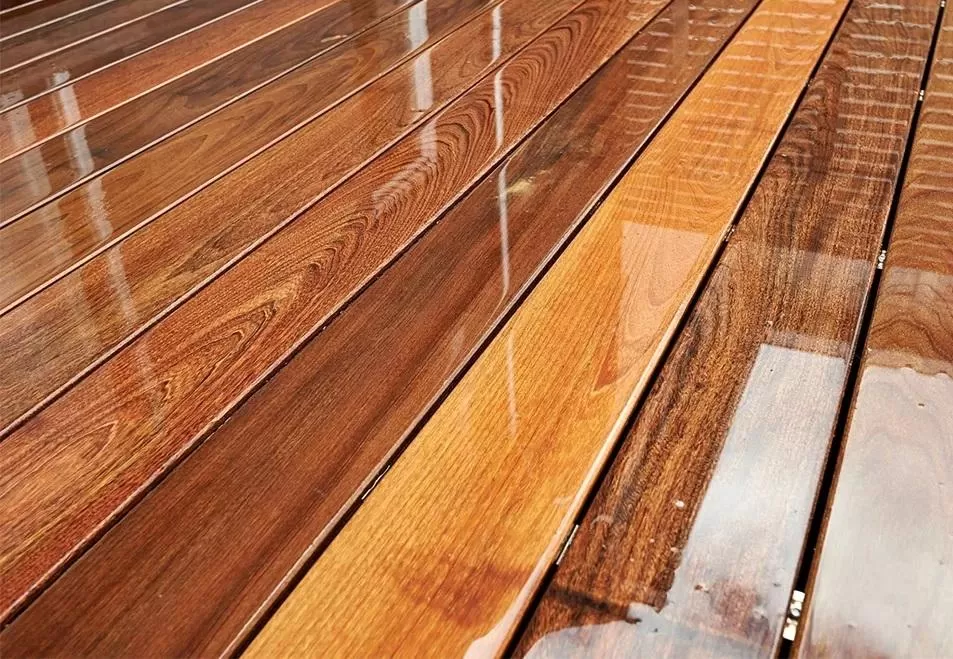
Epoxy also adheres quite well to wood and is widely used in epoxy resin tables, furniture, wood protective coatings, wood composites and technical wood glue.
Why does Epoxy adhere well to wood?
Wood has a fibrous structure and many natural pores. Epoxy can penetrate the wood grain and create a very strong mechanical bond. In addition, epoxy after curing also helps increase surface hardness, resist water, and limit wood rot.
Difficulties in Construction on Wood
Although it sticks well, wood is a material that can shrink and expand with temperature and change with humidity. If you choose an epoxy system that is too hard, when the wood expands, it can cause cracking of the coating, separation of layers, and crow's feet.
Types of Wood that Adhere to Epoxy Well
Normally, stable dry natural wood sticks very well, MDF and plywood can also stick well if dry. On the contrary, damp wood often causes cloudiness, air bubbles, and reduced adhesion.
Important Note
Before applying epoxy to wood, you should sand, clean dust, ensure low wood moisture, and you can apply a thin layer of sealer first.
ADHESION OF EPOXY ON PLASTIC
This is the part that confuses many people the most. Not all epoxy resins adhere well.
Epoxy Resins Adhere Well
Epoxy usually adheres quite well to PVC, ABS, FRP, Fiberglass Composite and some types of acrylic. These materials have relatively high surface energy, so epoxy is easier to bond.
Types of Plastic that are Difficult to Stick to
Epoxy often adheres very poorly to PE (Polyethylene), PP (Polypropylene) and PTFE (Teflon). These are resins with low surface energy, making it difficult for epoxy to spread evenly and create bonds. When covering these types of plastics, epoxy can peel off in whole pieces, easily separate layers, and cannot withstand impact.
How to Increase Grip on Plastic
To improve adhesion, strong sanding, plasma or flame treatment, use of specialized primer or increased mechanical roughness are often required. In industry, surface treatment is an almost mandatory step when coating difficult-to-adhere plastic with epoxy.
IMPORTANT FACTORS DECIDING THE ADHESION OF EPOXY
Whether steel, concrete, wood or plastic, the adhesion of epoxy still depends on a number of core factors.
- Surface Cleanliness. Grease, dust and moisture are the biggest "enemies" of epoxy. Just a thin layer of oil can cause the coating to completely peel off.
- Roughness. Surfaces that are too glossy often reduce mechanical grip. Therefore, sanding, sandblasting, and sandblasting are very important steps.
- Mixing Ratio. Epoxy needs to be mixed in the correct ratio between resin and hardener. If mixed incorrectly, it will not cure completely, reduce polymer bonding, and reduce adhesion.
- Environmental Conditions. Environmental temperature and humidity directly affect the curing reaction. Construction in environments that are too cold, too humid, or have condensation will significantly reduce adhesion.
Epoxy resin is famous for its strong adhesion on many types of materials such as steel, concrete, wood and some types of plastic. A typical example is epoxy resin YD 011X75. However, actual adhesion depends not only on the epoxy itself but also greatly on surface treatment, cleanliness, humidity and application techniques.
For steel, epoxy achieves extremely high adhesion if the surface is properly cleaned and roughened. With concrete, the ability to penetrate capillaries helps epoxy create a durable bond. On wood, epoxy adheres well and increases surface protection. Particularly with plastic, it is necessary to clearly understand each type of material because there are types of epoxy resins that are very difficult to adhere to without specialized treatment.
Understanding the adhesion mechanism of epoxy will help beginners avoid many common mistakes such as peeling, blistering or reducing coating life, thereby choosing the right material solution for each practical application.
>> View category details Epoxy resin <<
>> See more Epoxy resin YD 011X75 <<
>> See more Longoil alkyd resin <<
MEGA VIETNAM GENERAL TRADING COMPANY LIMITED
Address: Floor 2-A2-IA20, Nam Thang Long Urban Area, Ward. Pham Van Dong, Phu Thuong Ward, City. Hanoi.
Email: contact@megavietnam.vn; Tel: (+84) 24 375 89089;
Website: megavietnam.vn; Hotline: 1800.577.728; Zalo: 0971.023.523